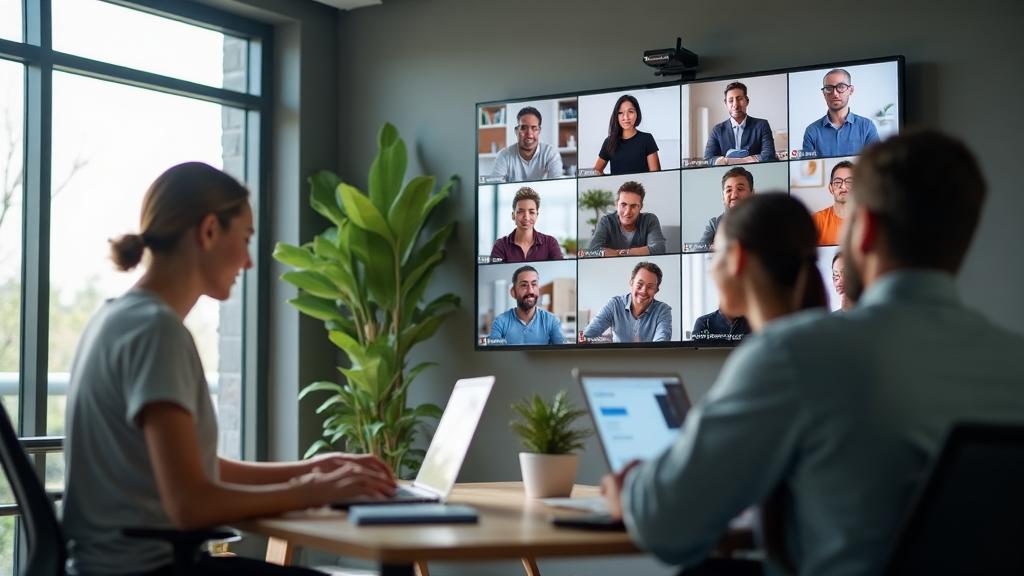
Remote work has transformed from a temporary pandemic response to a permanent feature of the consulting landscape. Many organizations now operate with fully remote or hybrid teams distributed across cities, countries, or even continents. While remote work offers tremendous benefits—access to global talent, reduced overhead costs, improved work-life balance—it also creates unique challenges for collaboration and team cohesion. Mastering remote team collaboration isn't about replicating in-office work online; it requires new approaches designed specifically for distributed environments.
Communication Architecture
Effective remote collaboration starts with the right communication architecture. Different types of communication require different tools and approaches. Quick questions and updates work well in chat platforms like Slack or Teams. Complex discussions benefit from video meetings. Detailed information sharing happens through documents and wikis. Project coordination requires dedicated project management tools.
The key is intentional tool selection and clear guidelines about what communication happens where. When everything flows through email or scattered across too many platforms, important information gets lost and teams become overwhelmed. Create a communication strategy that specifies which tools serve which purposes and how information should be shared.
Asynchronous communication becomes more important in remote environments, especially with distributed time zones. Not everything requires real-time discussion. Document decisions, share updates in written form, and create recordings of important meetings so team members can engage when it fits their schedules.
Building Trust Remotely
Trust is the foundation of effective teamwork, but it's harder to build when team members rarely or never meet face-to-face. Remote teams must be intentional about trust-building. This starts with reliability—consistently delivering on commitments, responding to communications promptly, and being present and engaged during meetings.
Transparency helps build trust remotely. Share your work, including work-in-progress, so others can see what you're doing. Be open about challenges and ask for help when needed. Assume positive intent when communications could be interpreted multiple ways—text lacks the tone and body language that prevent misunderstandings in person.
Create opportunities for personal connection beyond just work topics. Virtual coffee chats, online games, or channels for sharing personal interests help team members know each other as people, not just colleagues. These connections create the social capital that makes collaboration smoother when work challenges arise.
Structured Collaboration Practices
Remote teams benefit from more structure than co-located teams need. Establish clear working agreements about core hours when everyone is available, response time expectations for different communication types, and meeting protocols. Document processes and decisions so information is accessible to everyone.
Regular check-ins and status updates become more important when you can't just walk by someone's desk to see what they're working on. Daily stand-ups or weekly team meetings provide rhythm and visibility. But balance structure with flexibility—too many meetings and rigid processes can make remote work feel micromanaged.
Use collaborative tools that provide visibility into project status, task assignments, and progress. Everyone should be able to see the big picture and understand how their work fits into team goals. This shared visibility replaces the ambient awareness that happens naturally in physical offices.
Video Meeting Best Practices
Video meetings are essential for remote teams but can be exhausting if overused or poorly managed. Be intentional about when video meetings are actually needed versus when asynchronous communication would work better. Keep meetings focused with clear agendas and time limits.
Establish meeting norms that create engagement. Cameras on helps people stay focused and pick up on visual cues. Mute when not speaking to minimize background noise. Use chat for questions or comments that don't require interrupting the speaker. Start with brief personal check-ins to warm up the conversation.
Combat video fatigue by building in breaks during long meetings, varying meeting formats, and occasionally using audio-only calls for discussions that don't require screen sharing. Record meetings for those who can't attend live, but provide summaries so people don't need to watch entire recordings.
Maintaining Team Culture
Strong culture doesn't happen automatically in remote environments—it requires intentional cultivation. Clearly communicate your values and how they guide decisions and behaviors. Recognize and celebrate when team members exemplify cultural values. Address behaviors that contradict values quickly and directly.
Create rituals and traditions that reinforce culture. This might include weekly team recognition, monthly all-hands meetings, or quarterly virtual events. Find creative ways to celebrate achievements and milestones. Share stories that illustrate your culture in action.
Onboard new remote team members thoughtfully with clear orientation, assigned buddies, and structured learning. First impressions matter enormously for remote employees who don't have organic opportunities to absorb culture by being in the office.
Managing Performance Remotely
Some managers struggle with remote performance management, fearing they can't assess productivity without seeing employees work. Effective remote management focuses on outcomes rather than activity. Set clear goals and expectations, provide resources and support, and evaluate based on results delivered.
Regular one-on-one meetings become more important for remote teams. These provide opportunities for coaching, feedback, problem-solving, and career development conversations that might happen more informally in offices. Schedule them consistently and protect this time.
Use data and metrics to make performance visible, but avoid surveillance that erodes trust. Activity monitoring software that tracks every keystroke creates toxic culture. Instead, use project management tools that show work progress, productivity metrics that measure meaningful outputs, and open conversations about challenges and support needs.
Remote Collaboration Enhanced by Hice.ai
Hice.ai is designed from the ground up to support distributed consulting teams. The platform provides a unified workspace where remote team members can access project information, client data, candidate profiles, and team schedules regardless of location or time zone. Its AI assistant facilitates asynchronous collaboration by summarizing conversations, surfacing relevant information, and suggesting optimal meeting times across multiple time zones. Integrated communication tools keep teams connected while project dashboards provide the shared visibility that remote teams need to stay aligned. Whether your team is fully remote, hybrid, or occasionally distributed, Hice.ai ensures collaboration remains seamless and productive.
Conclusion
Remote team collaboration requires different skills and approaches than traditional co-located work, but organizations that master it unlock significant advantages. They access broader talent pools, reduce costs, offer flexibility that attracts and retains top performers, and often achieve higher productivity than office-based teams. Success requires investment in the right tools, intentional communication practices, focus on trust and culture, and continuous learning about what works for your specific team. Remote collaboration is not just viable—done well, it's a competitive advantage.
The Real Cost of Remote Coordination
Remote work does not remove the cost of coordination: it moves it. What an office resolved with a thirty-second question becomes a message, a wait and sometimes a meeting. Multiplied across a project team, that shift can consume more time than the commuting it saves, and it is the main reason some firms conclude that remote does not work for them when what does not work is their communication design.
The answer is not more meetings or more channels, but writing more and better. An effective remote team documents decisions instead of explaining them, keeps project context in a place anyone can consult without asking, and reserves synchronous time for what genuinely needs it: debating alternatives, resolving disagreements and holding difficult conversations. Everything else fits in a well-written document.
There is an additional cost that is rarely accounted for: the knowledge that used to travel by proximity. A junior consultant in an office learns by overhearing how a senior handles a tricky call. Remotely that does not happen by accident and has to be engineered deliberately, by inviting people to observe, recording relevant sessions with consent and making explicit the reasoning that previously spread by osmosis.
Meetings That Deserve to Exist
A remote meeting justifies its cost when three conditions hold: there is a concrete decision to make, the people who can make it are present, and the necessary material was read beforehand. If any of the three is missing, what happens is a status update with an audience, and a status update is written in five minutes and read in two.
It is worth reviewing the recurring calendar every quarter with a simple question: if this meeting disappeared tomorrow, what would break? The ones without a clear answer usually survive by inertia and consume the most expensive part of the team's week. In a professional services firm, where people's time is literally the product, two hours recovered per consultant per week equals a direct percentage of billable capacity.
Remote Onboarding Without Improvisation
Onboarding is where the difference between designed and improvised remote work shows most. A new joiner in an office resolves half their questions by looking around; remotely those same questions accumulate in silence and produce, within a few weeks, the sense of not performing.
Remote onboarding that works has four concrete elements: a context document explaining how the firm works rather than only what it does, a reference person other than the manager for the questions that feel embarrassing, a real and bounded first assignment within the first fortnight, and scheduled check-ins at seven, thirty and ninety days with prepared questions. All four cost little and replace exactly what the office used to provide for free.